
10 Ways to Generate High Traffic to Your Website
10 Ways to Generate High Traffic to Your Website Driving high traffic to your website is one of the most important goals for any business, blogger, or online entrepreneur. More visitors mean greater opportunities to build brand awareness, generate leads, and increase sales. However, attracting consistent traffic requires more than simply launching a website—it demands a strategic approach. By combining search engine optimization (SEO), valuable content, social media marketing, and user-focused improvements, you can steadily grow your audience. Here are ten effective ways to generate high traffic to your website. The first and most important strategy is to create high-quality, SEO-optimized content. Publish informative articles, guides, and blogs that answer your audience's questions while naturally incorporating relevant keywords. Well-written content has a better chance of ranking on search engines and attracting organic visitors. Second, maintain a consistent blogging schedule. Search engines prefer websites that are regularly updated with fresh content. Posting new blogs consistently also gives your audience more reasons to return and provides additional opportunities to rank for different keywords. Third, leverage social media platforms to promote your content. Share blog posts on platforms such as Facebook, LinkedIn, Instagram, X, and Pinterest. Engaging visuals, short videos, and compelling captions can increase clicks and encourage users to visit your website. Fourth, build and nurture an email marketing list. Encourage visitors to subscribe by offering valuable resources such as free guides, templates, or newsletters. Regular email campaigns help drive repeat traffic and keep your audience informed about new content and offers. Fifth, invest in paid advertising when appropriate. Platforms like Google Ads and social media advertising allow you to reach highly targeted audiences based on demographics, interests, and search behavior. Paid campaigns can generate immediate traffic while your organic presence continues to grow. Sixth, earn quality backlinks from reputable websites. When trusted websites link to your content, search engines view your site as more authoritative, improving your rankings and bringing referral traffic from those sources. Seventh, optimize your website's speed and mobile responsiveness. Visitors expect pages to load quickly, and a slow website often leads to higher bounce rates. Since a large percentage of users browse on mobile devices, a responsive design is essential for both user experience and SEO. Eighth, use internal linking throughout your website. Linking related articles and pages helps visitors discover more content, increases the time they spend on your site, and assists search engines in understanding your website's structure. Ninth, collaborate with influencers, industry experts, and complementary businesses. Guest blogging, interviews, webinars, and content partnerships expose your website to new audiences and can significantly increase referral traffic. Finally, monitor your website's performance using analytics tools. Track metrics such as page views, traffic sources, bounce rate, and user behavior to understand what works best. Use these insights to refine your content strategy, improve underperforming pages, and maximize future traffic. In conclusion, generating high website traffic is an ongoing process that requires consistency, quality, and continuous optimization. By implementing these ten strategies—creating SEO-friendly content, blogging regularly, promoting on social media, building an email list, using paid advertising, earning backlinks, improving website performance, strengthening internal links, forming strategic partnerships, and analyzing your results—you can attract more visitors and achieve long-term online growth. Focus on delivering value to your audience, remain consistent in your efforts, and your website traffic will continue to increase over time.

How to Generate Fee Traffic Within 20 Days or Less
How to Generate Free Website Traffic Within 20 Days or Less Generating free website traffic within 20 days is possible if you focus on the right strategies and stay consistent. While long-term SEO results usually take time, you can still attract a significant number of visitors by combining content marketing, search engine optimization, social media promotion, and community engagement. The key is to publish valuable content, promote it actively, and optimize every opportunity to reach your target audience without spending money. The first step is to perform keyword research. Identify low-competition, high-intent keywords that your audience is searching for. Use free tools such as Google Keyword Planner, Google Trends, or AnswerThePublic to discover topics that have good search potential. Write content that directly answers users' questions and naturally includes your target keywords in the title, headings, and body. Next, publish high-quality blog posts consistently. Aim to publish at least three to five well-researched articles during the first two weeks. Each article should provide practical solutions, include engaging visuals, and have a clear call to action. Evergreen content, such as how-to guides, checklists, and tutorials, tends to perform well and continues attracting traffic over time. Search engine optimization (SEO) is another essential factor. Optimize your page titles, meta descriptions, image alt text, and internal links. Make sure your website loads quickly, works well on mobile devices, and provides a smooth user experience. These improvements help search engines understand your content and improve your chances of ranking higher. Promote your content across multiple social media platforms. Share your blog posts on Facebook, LinkedIn, X, Instagram, Pinterest, and other platforms where your audience is active. Instead of posting only links, create engaging captions, short videos, infographics, or carousel posts that encourage users to click through to your website. Join online communities related to your niche. Participate in Facebook Groups, Reddit communities, Quora, and industry forums by answering questions and providing helpful advice. When relevant, include links to your blog posts as additional resources. Focus on being genuinely helpful rather than overly promotional. Build an email list from day one. Offer a free resource such as an ebook, checklist, template, or newsletter in exchange for email subscriptions. Send regular emails featuring your latest articles, tips, and updates to encourage repeat visits and build a loyal audience. Another effective strategy is guest blogging. Reach out to websites in your niche and offer to write valuable articles for their audience. In return, you can usually include a link back to your website, helping you gain referral traffic and improve your website's authority. Repurpose your content into different formats to maximize its reach. Turn blog posts into short videos, infographics, podcasts, social media threads, or presentation slides. Sharing the same information in multiple formats allows you to reach different audiences while saving time. Finally, monitor your performance using analytics tools. Track which pages receive the most traffic, where visitors come from, and which content generates the highest engagement. Use these insights to update successful articles, improve underperforming pages, and create more content around topics that resonate with your audience. Although generating free traffic within 20 days requires dedication, it is entirely achievable with consistent effort. By publishing valuable content, optimizing for SEO, promoting your articles across social media, participating in online communities, building an email list, guest blogging, and analyzing your results, you can increase your website traffic without spending money. The key is to focus on delivering value, staying consistent, and continuously improving your content strategy. Even if your traffic starts small, these habits lay the foundation for sustainable, long-term growth.
How to Use Social Media Marketing Effectively
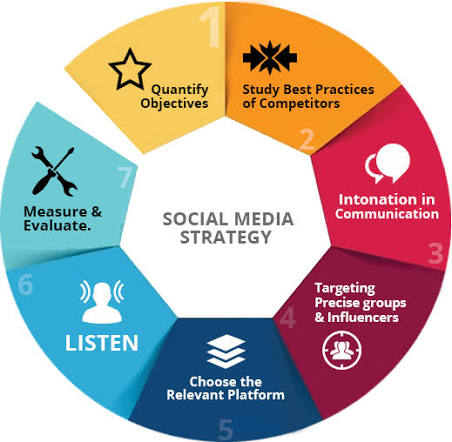
Social media marketing works best when you treat it like a conversation, not a billboard. Too many brands jump onto Instagram, Facebook, or LinkedIn just to "be active" and then wonder why nothing converts. The real goal is to meet your audience where they already spend time, give them something useful or entertaining, and guide them toward a clear next step with your business. The first step is to get clear on why you’re using social media at all. Without a goal, you’ll end up posting randomly. Are you trying to build awareness so more people in Sambhal and nearby know your brand exists? Are you trying to drive engagement so people comment, save, and DM you? Or are you focused on leads and sales, like getting website clicks, WhatsApp inquiries, and bookings? Your goal decides what you post and how you measure it. Awareness campaigns care about reach and video views. Sales campaigns care about link clicks, messages, and conversions. When you define this upfront, every piece of content has a job. Once you have a goal, you need to know exactly who you’re talking to. "Everyone" is not a strategy. Think about 1 or 2 types of people who buy from you. What problems do they have? What do they scroll through at night? What makes them save a post instead of just liking it? For example, a local service business shouldn’t post generic tips. They should post things like "3 ways to protect your skin in UP’s monsoon humidity" or "how to choose the right package for your budget." That level of specificity makes people feel like you understand them, and that’s what builds trust online. You also don’t need to be on every platform. In 2026, it’s better to be excellent on 2 platforms than mediocre on 5. Instagram and Facebook are still powerful for visual businesses, local services, and community building through Reels and Stories. YouTube is great if you can teach something and build long-term trust. LinkedIn works for B2B and professional services. WhatsApp Business is essential in India for direct sales, follow-ups, and customer support. Pick the 2 where your customers already are, learn how content works there, and go deep before adding more. Content is where most people get stuck, but it’s simpler with a rule: 80% value, 20% promotion. People don’t follow brands to be sold to every day. They follow to learn, laugh, or feel connected. So split your content into a few pillars. Educate with how-tos, tips, and myth-busting. Entertain with trends, relatable moments, and behind-the-scenes. Engage with polls, questions, and user-generated content. And then promote with offers, testimonials, and product highlights. Short-form video and Reels currently get the most reach, carousels get the most saves, and Stories drive the most DMs. But the format only works if the message is relevant. Always end captions with a question or a call to action so people know how to respond. Consistency beats perfection. The algorithm rewards accounts that show up regularly, even if it’s just 3 times a week. It’s better to post 3 thoughtful posts than 7 rushed ones. Batch your content on one day, schedule it, and spend 15 minutes daily replying to comments and DMs in the first hour after posting. That early engagement tells the platform your content is worth pushing to more people. Paid ads should come after you know what works organically. Don’t boost posts blindly. Post for 2 weeks, see which topics get comments and shares, and then put a small budget behind those winners. Meta Ads let you target by location, interests, and behavior, and retargeting people who already engaged with you is the fastest way to get results. Even ₹500-₹1000 spent on the right audience can outperform ₹5000 spent on cold traffic. Finally, social media needs a bridge to business. Your bio should have a clear offer and a link or WhatsApp button. Every post should tell people what to do next: "DM us PRICE", "Comment GUIDE for the free PDF", "Tap the link to book." And when people message you, reply fast. Move the conversation off social to WhatsApp or a call as soon as possible. Also share social proof constantly — reviews, before-and-afters, client wins. People buy from people they trust. To know if it’s working, ignore vanity metrics after a while. Track reach to see if new people are finding you, engagement rate to see if they care, and most importantly, link clicks, DMs, and actual sales. Review this every week and double down on what gets results. Kill what doesn’t after giving it 4-6 weeks. The biggest mistakes are trying to copy competitors, posting only product photos, ignoring comments, buying followers, and quitting too early. Social media compounds. Week 1 will look quiet. Month 3 will look completely different if you stay consistent. In short, effective social media marketing is this: pick the right platforms for your audience, post useful content consistently, use paid ads to amplify winners, and always give people a clear next step. Start with one goal, two platforms, and three posts a week for 30 days. Then review, improve, and scale. That’s how you turn followers into customers.
How to Create Highly Targeted Ad Copies
A great ad copy doesn’t try to talk to everyone. It feels like it was written for one specific person, with one specific problem, at one specific moment. That’s what "highly targeted" means. When your ad speaks directly to someone’s situation, they stop scrolling. When it’s generic, they keep scrolling. The process starts way before you write a single word. The biggest mistake people make is opening Meta Ads or Google Ads and writing headlines first. You can’t write a targeted ad if you don’t know who you’re targeting and what they care about right now. So step one is to get obsessive about your audience. Break them down beyond "age 25-45 in Sambhal. Think in terms of situations. Who are they? What are they trying to do? What’s stopping them? What have they tried before that didn’t work? For example, instead of targeting "people who want to lose weight," target "working moms in their 30s who gained 8kg post-pregnancy, don’t have time for the gym, and feel guilty eating outside food." That second group has specific pain points, language, and objections. Your ad copy can now mirror their exact thoughts. The more specific your audience, the easier the copy becomes, because you’re just putting their words back to them .Next, match your copy to the platform and the stage of awareness. Someone seeing you for the first time on Instagram Reels is not ready for "Buy Now 50% Off." They don’t trust you yet. At the awareness stage, your job is to educate or entertain and get attention. Use hooks like "3 mistakes most first-time home buyers make in UP" or "Why your salon visits aren’t giving you long-lasting results." At the consideration stage, people are comparing options. Here you can talk about benefits, proof, and differences: "Unlike regular coaching, we give 1:1 WhatsApp support for 30 days." At the decision stage, they’re ready to act. Now you can be direct: "Book your slot for this weekend. Only 5 spots left." The structure of a highly targeted ad copy follows a simple flow: Hook → Agitate Problem → Present Solution → Proof → Call to Action. The hook’s job is to call out the right person immediately. The fastest way to do that is to name them or name their situation in the first line. "If you run a boutique in sambhal. or "Tired of ads that get likes but no sales?" When someone feels seen, they keep reading. Then agitate the problem, but don’t be dramatic. Just describe it in their words. What’s annoying them today? "Posting every day but still no DMs. Boosting posts but no bookings." This makes them think "that’s me." Then present your solution, but don’t list features. Translate features into outcomes they care about. Don’t say "We run Meta Ads." Say "We get you 20-30 qualified WhatsApp leads per month without you having to learn ads." People buy outcomes, not processes. Proof is what makes them believe you. This can be a number, a testimonial, a before-and-after, or even a simple "Trusted by 200+ local businesses." Without proof, your claim feels like marketing. With proof, it feels real .End with one clear call to action. Don’t give 3 options. "DM us 'INFO'" or "Tap to book your free audit" is better than "Learn more, visit website, call us." One action removes confusion .Language matters a lot for targeting. Use the words your audience actually uses. If your customers say "ad nahi chal rahi," don’t write "your advertising campaign is underperforming." Mirror their tone. If you’re targeting Gen Z on Instagram, be casual and use trends. If you’re targeting business owners on LinkedIn, be professional and data-driven. Also use specifics instead of vague claims. "Get more leads" is weak. "Get 15-20 qualified leads in 30 days" is strong because it’s concrete and believable. Another key tactic is to create multiple versions of the same ad for different micro-segments. Your core offer might be the same, but the angle changes. For a fitness coach: Version 1 for new moms: "Lose post-pregnancy weight in 20 min/day from home." Version 2 for working professionals: "No gym? No problem. Fat loss plan for 9-5 jobs." Same service, different entry point. This is how you scale targeting without creating 10 different products. Finally, test and refine. Even the most targeted copy can be improved. Run 3-4 variations with different hooks but the same body. See which one gets more clicks and DMs. Then keep the winner and test the next element — maybe the CTA or the proof. Data tells you what your audience actually responds to, not what you think they will. What you want to avoid is being generic, feature-dumping, and using jargon. "Industry-leading solutions for your business growth" could be said by anyone and therefore means nothing to anyone. "We help dentists in UP get 10+ new patient bookings every month through Instagram" can only be said by someone who understands dentists in UP. In short, highly targeted ad copies come from deep audience research, speaking to one person and one problem, matching the message to their stage of awareness, using their language, and backing it with proof. When you do this, ads stop feeling like ads. They feel like helpful messages that arrived at the right time. And that’s when people click, message, and buy.
Top SEO Techniques That Will Work in 2025
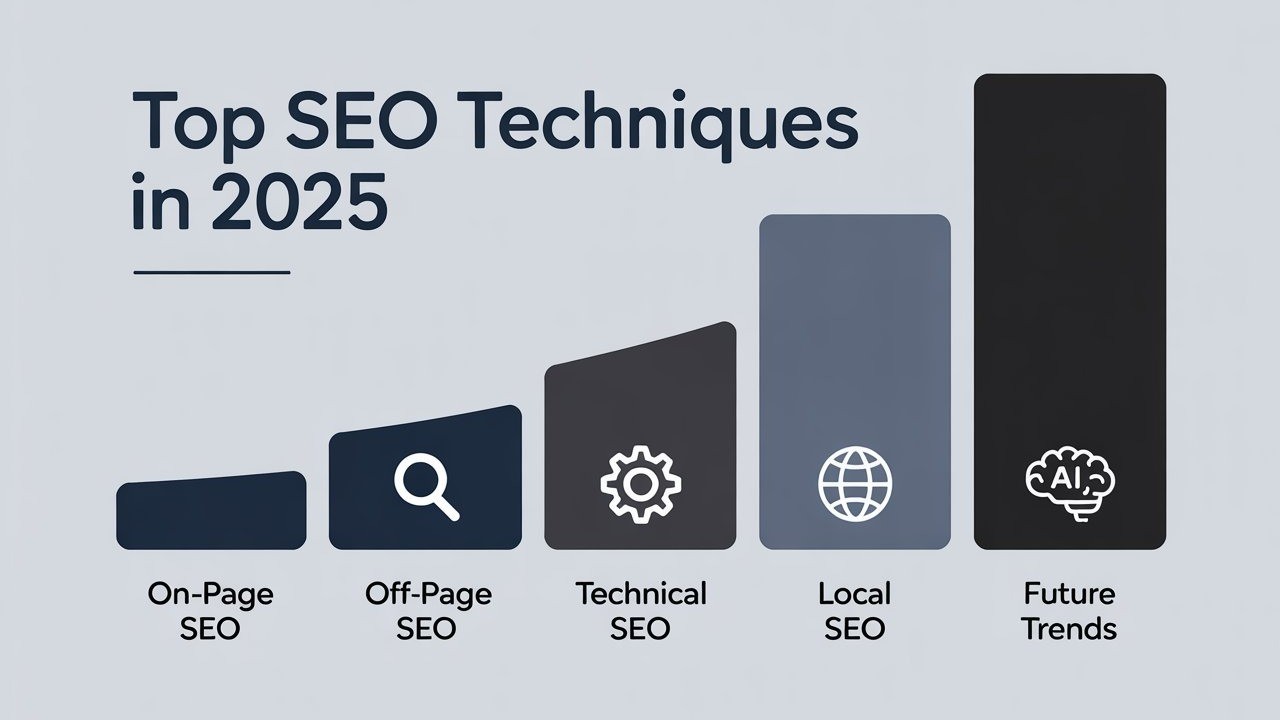
*Top SEO Techniques That Will Work in 2025* SEO in 2025 is no longer about stuffing keywords and building random backlinks. Google has gotten much smarter, and with AI Overviews, voice assistants, and stricter quality checks, the sites that win are the ones that genuinely help people and prove they can be trusted. The core idea now is simple: be the best answer for a specific search intent, make your site fast and easy to use, and show that real experts are behind your content. The first technique that will keep working is matching search intent and building topical authority. Keywords still matter, but Google now cares more about why someone is searching. When a person types "best running shoes," they could want reviews, a buying guide, or the cheapest deals. If you look at the top results for any keyword, you’ll see a pattern in the format Google prefers. Your job is to match that format and then go deeper. Instead of writing one broad article, build topic clusters. Have a main pillar page that covers the topic broadly, and then create supporting pages that answer every related question. For example, if your pillar is "digital marketing," your cluster pages could be "SEO for small business," "Meta ads for local shops," and "Instagram marketing tips." This structure tells Google you’re an authority on the topic, not just chasing one keyword. It also keeps visitors on your site longer because they find all their answers in one place. The second technique is doubling down on E-E-A-T: Experience, Expertise, Authoritativeness, and Trust. This is huge in 2025, especially for topics that impact health, money, or business decisions. Google wants to know who wrote the content and why they should be believed. Add real author bios with credentials, photos, and links to their other work. Show proof of experience. "I tested 10 treadmills for 60 days" will always beat "treadmills are good for cardio." Include case studies, client results, testimonials, and update dates on your articles. Trust also comes from outside your site. Get mentioned on other reputable websites, even without a link. Get reviews on Google and other platforms. Backlinks still help, but now brand mentions and citations across the web also signal that you’re a real authority. Third, technical SEO remains the foundation. If your site is slow or broken, great content won’t rank. In 2025, Core Web Vitals are still critical. Your pages need to load in under 2.5 seconds on mobile, have stable layouts that don’t shift while loading, and respond quickly to clicks. With most users in India coming from mobile, mobile-first design is mandatory. Compress images, use fast hosting, and clean up unnecessary code. You also need to help Google understand your pages with structured data or schema markup. Adding schema for FAQs, products, reviews, how-tos, and local business can get you into rich results and AI Overviews, which now take up a lot of space at the top of search. Don’t forget the basics: fix broken links, use clear internal linking so pages connect to each other, and keep your sitemap updated. Fourth, you have to optimize for AI and voice search. More people are asking full questions to Google, ChatGPT, and Gemini instead of typing short keywords. They ask things like "what is the best budget phone under 20000 with a good camera in India." To rank here, write in a natural question-and-answer format. Use headings that are actual questions people ask. Answer them directly in the first two sentences, then provide more detail below. This format is exactly what gets pulled into AI Overviews and featured snippets. Also aim to answer the query fully on the page so users don’t need to bounce back to Google. Fifth, video and visual content are becoming essential for SEO. YouTube is still the second biggest search engine, and Google often shows videos for "how to" and "review" searches. In 2025, every important blog post should have a supporting short video. Embed it on the page, add a transcript, and optimize the title and description. For images, use original photos and graphics instead of stock. Use descriptive file names and alt text, and compress them to WebP for speed. Original visuals get more shares and backlinks, which still boost rankings. Sixth, if you serve a local area, local SEO is one of the fastest ways to get results. Your Google Business Profile is now as important as your website. Keep it updated with photos, services, posts, and business hours. Ask for reviews regularly and reply to them. Use local keywords naturally in your website content like "SEO agency in Sambhal" instead of just "SEO agency." Get listed in local directories and try to get backlinks from local news sites or community pages. If you serve multiple cities, create separate location pages with unique content for each area. Seventh, focus on user experience because Google is watching it. When someone clicks your result, do they stay and read, or do they hit back immediately? To keep people engaged, write scannable content with short paragraphs, clear headings, and bullet points. Add a table of contents for long articles. Remove annoying popups. Make sure navigation is simple. The goal is to fully answer the question so the user doesn’t need to search again. Eighth, refresh and update old content instead of only publishing new posts. This is one of the most underused techniques in 2025. Every 3 months, audit your top-performing pages. Update statistics, add new sections, improve images, and change the publish date. Google rewards fresh, maintained content. An updated page often outranks a brand new but thin page. What you should avoid in 2025 is obvious. Don’t use AI to mass-produce low-quality articles without human editing. Don’t buy backlinks or use spammy tactics. Don’t create thin pages just to target keywords. Google’s helpful content system can detect content made for search engines and will push it down. To sum it up, SEO in 2025 rewards depth, trust, and speed. Understand what people are really searching for, prove you’re an expert, make your site technically solid, and format content for both humans and AI. Pick one topic, own it completely, and keep improving it. Do that consistently for six months and you’ll see traffic and leads compound. If you want, I can turn this into a 2025 SEO checklist tailored to your website or industry.